Post-disaster human depopulation
Earth AbidesPost-disaster human depopulation describes the radically diminished human world left by the Great Disaster: a world in which mass death is followed by isolation, failing infrastructure, and new threats to those who survived. Its defining tension is that human beings have not vanished, but the networks and protections that made their lives sustainable are breaking down; against that unraveling, Ish’s later community becomes evidence that survival and social renewal remain possible.
The Scale of the Human Loss
An early newspaper, already a week old when Ish reads it, gives him evidence that the catastrophe has not been a simple, instantaneous extinction. Reports describe people fleeing cities, while those who remained faced the emergency without the panic Ish might have expected. Doctors and nurses continued working, other residents joined them as helpers, and city districts were designated for hospitals and concentration points. Ordinary business had stopped, but food was still distributed on an emergency basis. The reports say that even with a third of the population dead, telephone service and utilities remained in most cities. Authorities also imposed immediate mass burial regulations to prevent conditions that might produce a further collapse in public morale.
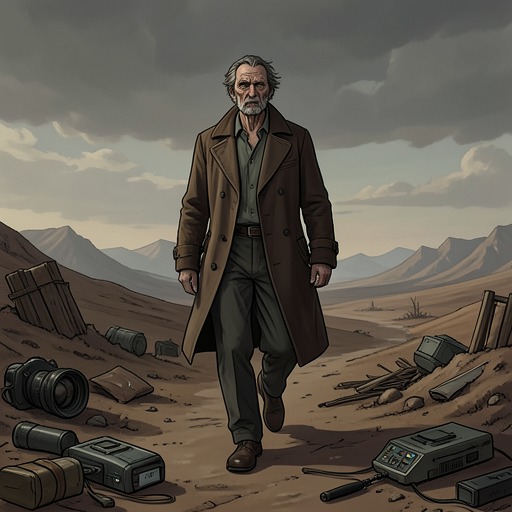
That account of organized response sits beside Ish’s growing awareness of solitude. He reads the paper twice, absorbed by the evidence, but it cannot tell him who has survived or whether a functioning society remains elsewhere. His own position is unusual: he did not live through the deaths of his family and other people around him, and so escaped what he understands as the worst of the shock. The difference does not spare him loneliness. It means that he confronts the diminished world without having witnessed the loss that has devastated many other survivors.
Civilization’s Protections and Their Failure
The collapse continues after the initial human disaster because the systems supporting everyday life depend on maintenance. The Power-and-Light system is designed with extensive redundancy: if a wire breaks, or one power-house fails, the wider network can redirect the load. For a time, the generators keep operating after the people who tend them have fallen ill. But the governors controlling the generators require regular attention. They are inspected for oil every ten days and may need more oil each month. Without that work, supplies diminish; governors fail one by one, water bypasses the generator wheels, and each lost generator increases the strain on those still running. The lights fade only after this gradual, cumulative failure.
The loss of electric power makes the invisible supports of household life newly apparent. Ish hoards candles, matches, and flashlights, partly as psychological protection against the darkness. Yet refrigeration proves more consequential than illumination: the ice-box stops working, and meat, butter, and lettuce in the deep-freeze spoil. The change is not simply that familiar conveniences disappear. Food preservation, like electric light, depended on a system whose continued operation could no longer be taken for granted.
On San Lupo Drive, an ordinary rainstorm reveals the same dependence in the built environment. Leaves wash into a drain and block it; water crosses the street, flows over the curb, cuts through the overgrown lawn, and runs beneath the neighboring house. The blocked drain could have been cleared in minutes, but Ish sees that similar failures must be occurring in innumerable places. Roads, drains, and walls remain physically present, yet their usefulness relies on repeated human repair and cleaning. As their maintenance ceases, water resumes paths that construction had redirected.
Secondary Threats to Survivors
Ish gives the dangers that follow the initial catastrophe a name: Secondary Kill. The phrase marks a distinction between dying in the disaster and dying afterward from conditions that civilization had once helped contain. He anticipates deaths from unlimited alcohol, murder, suicide, accidents, untreated disease, and the shock of having to readjust to life alone. A person might survive the initial upheaval and still be unable to survive its consequences; isolation turns an accident fatal, while the absence of medical care changes the prospects of disease.
The later typhoid outbreak in Ish’s community makes this danger concrete. Dick returns from an expedition and becomes ill, followed by Ezra and five children. Ish recognizes the illness as probably typhoid and understands that the group lacks the means to treat an established outbreak. Earlier inoculations among some adults can no longer be relied upon, and the children have no such protection. As more people fall ill, fear narrows around the community, threatening not only individual lives but the shared will to endure. The episode demonstrates how the losses of medical knowledge and public-health protection make a small surviving population vulnerable to a contagious disease.
From Isolation to a New Society
Depopulation is not the final condition of the story. Ish’s encounter with Em changes his experience of solitude: he tells her about the disaster, his fear, and his rattlesnake bite, while she draws him into speaking and shares the fact that she, too, remembers what he describes. Their connection makes possible a future beyond individual survival. Ish begins to imagine a new society and to seek other people who might join it, though he remains wary of the effects of shock on potential companions.
The small group on San Lupo Drive grows into a community, and the births of children gradually alter its scale and orientation. In the sixth year, all four women bear children; the number of children reaches ten, exceeding the adult population, with Evie apart from either count. The births matter in practical as well as emotional terms: they give the group a future to protect, even as the surrounding environment remains unstable. That fragility is unmistakable when drought thins the grass, hungry cattle break through the garden fence, and grasshoppers consume what the herd leaves behind. Human cooperation can establish a community, but it cannot remove the ecological pressures of the post-disaster world.
Meaning of the Depopulated World
The condition is therefore neither a clean return to nature nor a simple story of civilization’s disappearance. Human-built systems persist for a time, but their dependence on workers, inspection, and repair becomes visible as they fail. At the same time, animals and weather shape the circumstances of survival: cattle damage the garden, insects destroy crops, and rain exposes the neglected drainage network. The altered world is made through the interaction of human absence, abandoned infrastructure, and ecological change.
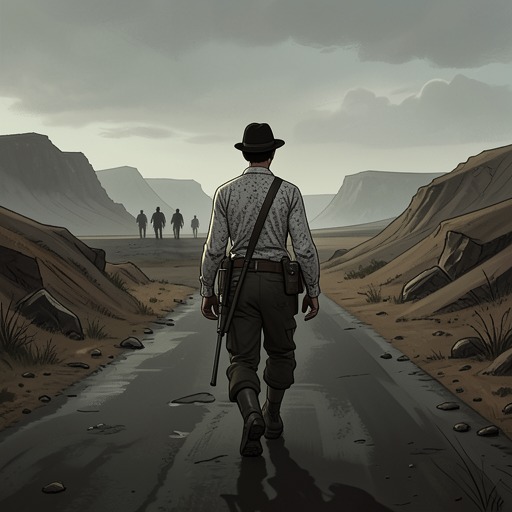
The later community answers depopulation without undoing it. Its members recover companionship and shared purpose, but remain exposed to dangers once mitigated by larger institutions, technical systems, and medical care. The contrast between the newspaper’s organized emergency response and the later vulnerability of a small household group measures how much protective capacity has been lost. Ish’s world is sparsely populated, but not empty; its central question is how a remnant of humanity can sustain collective life when the old supports have failed.